

Foreword

On behalf of all QuTech colleagues, I'm proud to present the annual report for 2025
UNESCO declared 2025 the International Year of Quantum Science and Technology, marking the 100th anniversary of the birth of quantum mechanics as a formal scientific discipline.
For QuTech, this was an ideal opportunity to highlight our mission: scaling reliable quantum computers and networks, from fundamental qubits to systems, software, and applications, and in close collaboration with a thriving quantum technology ecosystem for which we act as an incubator and enabler.
In Delft, QuTech and QDNL Delft organised the Delft Quantum Showcase, where researchers, startups and industry partners from the Delft hub presented their work and forged new collaborations, and in the second half of the year, QuTech chaired the international conference Superconducting Qubits & Algorithms (together with partners), as well as the biennial Quantum Networking Workshop.
Scientifically, QuTech achieved major milestones in 2025 with direct implications for scalability and practical application. One highlight was the development of QNodeOS, a control system for quantum networks that enables programmable, hardware-independent network applications. In quantum computing, we demonstrated that an electron can be moved across micrometer scales while preserving its spin, offering new design flexibility for on-chip connectivity. Another example was the controlled creation and movement of Majorana bound states in a chain of quantum dots by QuTech researchers; a significant step toward topological qubits.
Commercialisation remained a core focus. The startup ecosystem originating from QuTech, TU Delft, and TNO saw growing investments in 2025 and the joint Delft-grown companies now employ over 500 people. The total number of professionals in research and industry within the Delft quantum hub has grown to more than 1,000 people. Additionally, QuTech spun off another new startup - Frostbyte - (after spinning off three new companies in 2024), we saw more quantum companies moving to Delft to set up a presence, and our computing demonstrator Quantum Inspire 2.0 - built in collaboration with the ecosystem - received further upgrades allowing it to play a role in future use case research.
At QuTech we are all working hard to further develop our role as a cornerstone institute for the development of quantum technology in Europe and the Netherlands. We are proud to do our part building a vision for the future and developing policy and as our field moves closer to real-world applications.
Allow me to end with a personal note. I have the honor to lead this unique institute over the past years. In the course of 2026 I will reach my retirement age and the search for my replacement has already started. I look forward to seeing my successor lead QuTech and continue our mission to build the quantum future.
Kees Eijkel
General Director of QuTech

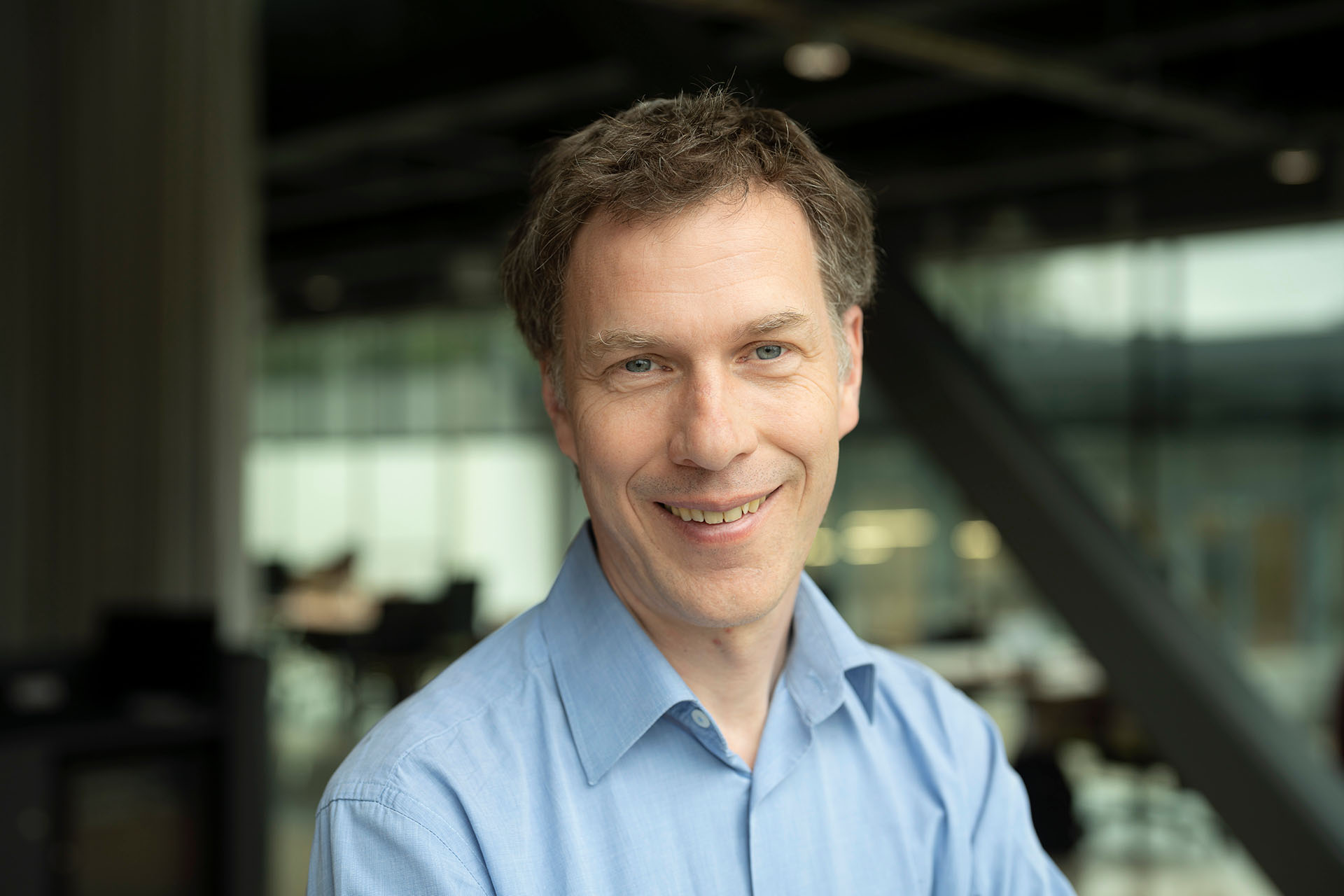
Lieven Vandersypen, director of research
“Our motto for 2025-2035 is ‘From world-class research to world-leading innovation’.”
On QuTech’s path beyond its first ten-year funding period, 2022 has seen two major highlights. First, we’ve drafted a new ambition document, setting out what we want to achieve in 2025-2035. Our motto for the new period is “From world-class research to world-leading innovation”. I’m happy to report that the document has been embraced across QuTech, TU Delft, TNO, and our partners. Second, we’ve welcomed an external committee of experts, assessing for the second time in our existence how we are doing, in terms of organisation, output, and visibility. The results, described elsewhere in this annual report, have been very positive indeed.
Focusing on our research achievements, 2022 has been a successful year. We have teleported information across a quantum network, produced a six-qubit chip in silicon that operates with low error-rates, broken the record in two-qubit gate fidelity for semiconductor qubits, and laid the basis for a new approach to creating Majorana’s. Together with Intel we’ve delivered the first industrially manufactured qubit.
Triggered by the discussions surrounding our earlier papers on Majorana fermions, we’ve drafted a new open-data policy that I think is quite forward-looking and could be a model for many other institutes. We’ve also had inspiring discussions on the topic of scientific integrity with the entire team.
In 2022 we’ve also acquired new research funding, for example in the European Quantum Internet Alliance, which aims to develop a full-stack prototype quantum network connecting distant cities. It’s also wonderful to see that funding increasingly benefits companies in the ecosystem around us, and the joint research projects with QuTech. TNO for example has been selected to lead a European network to drive testing and experimentation in quantum technology.
My personal highlight? Not so much giving Queen Máxima a tour, or having lunch at the royal palace, although that was really nice, too. The ambition document may sound abstract, but it really is an exciting development: it will guide everything we’ll work on in the coming years.


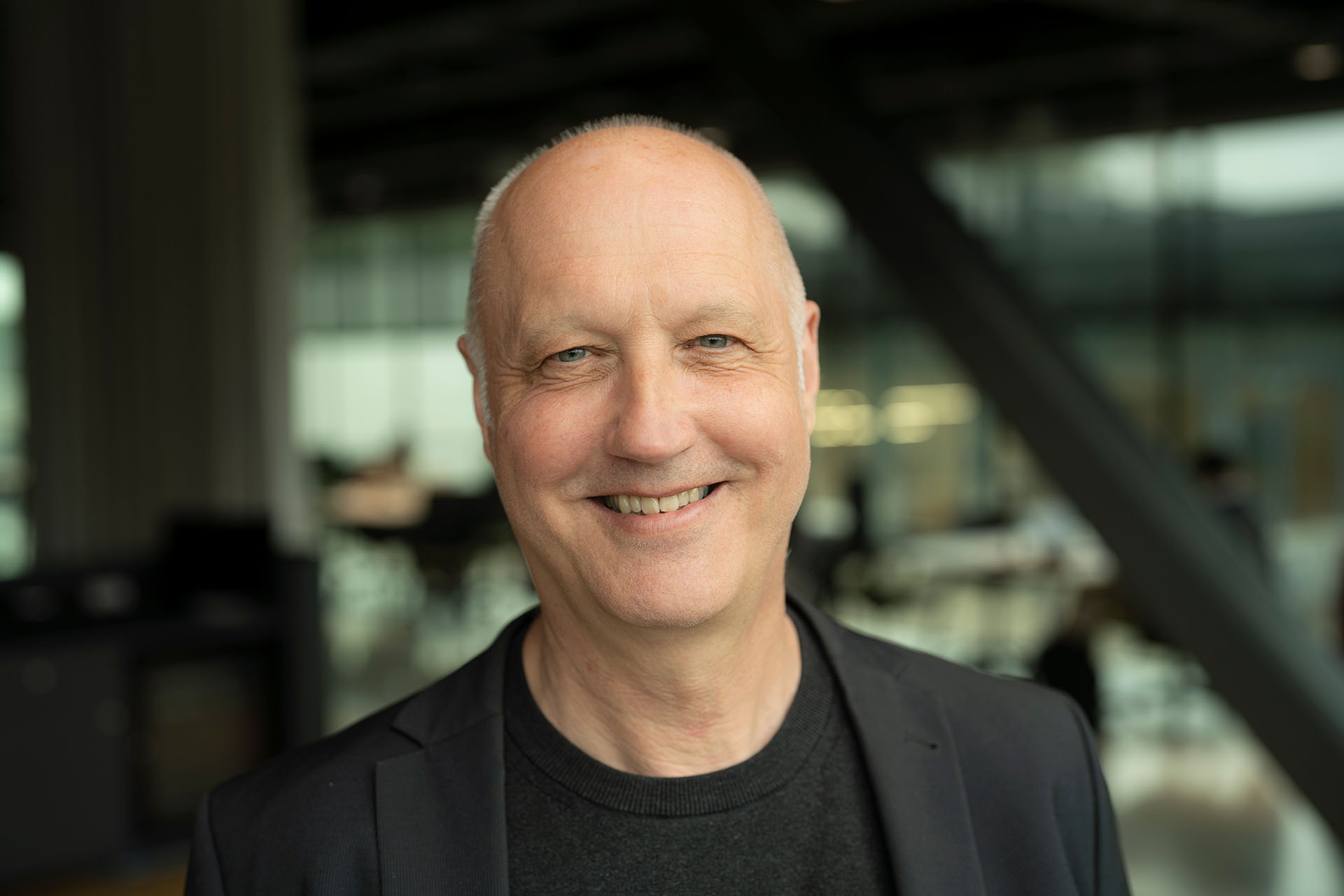
Kees Eijkel, director of business development
“The ecosystem around QuTech is growing rapidly and that’s exactly what we want.”
Looking back, the building of our new strategy to guide QuTech beyond its first ten years has been extremely valuable. We got to ask ourselves: what was our mission when we started, what has changed in the meanwhile, and what do we want to promise for the future?
We are also optimizing the way we valorise our knowledge. An important choice is always: do we transfer our outcomes to existing industry, or do we follow the route of starting up a new company? As we focus on the economic footprint in the Netherlands/EU, and as European industry is relatively risk-averse compared to companies in other continents, we strongly focus on the start-up route for now. We don’t build the next computer or internet system in isolation; we do it together with the start-ups that are expanding the research directions we once started. The research collaborations that are being initiated by QuTech increasingly involve such start-ups. In fact, the ecosystem around QuTech is growing rapidly and that’s exactly what we want. In 2023, it will grow to about our own size; in 2030, we hope it will be five times the size of QuTech. A crucial element here is the work of Quantum Delta NL, which was initiated in 2021 to develop and position the national ecosystem in quantum technologies.
In some ways, our work has become more complicated this year. Quantum technology is more and more recognized as a strategic technology that needs to be protected in the national interest. For QuTech, this means that the topic of information security has become more prominent.
Finally, as the world re-opened after Covid, we’ve all had to rediscover the dynamics of working together at QuTech instead of online. Collaborating in person brings so much added value, and I really missed it.
For me personally? I’ve reconnected with my performer roots, when I got to be master of ceremonies at The Hague in 2022 and of subsequent ‘Inside Quantum Technology’ events. I loved it and I can’t wait to do the same for future IQT events.
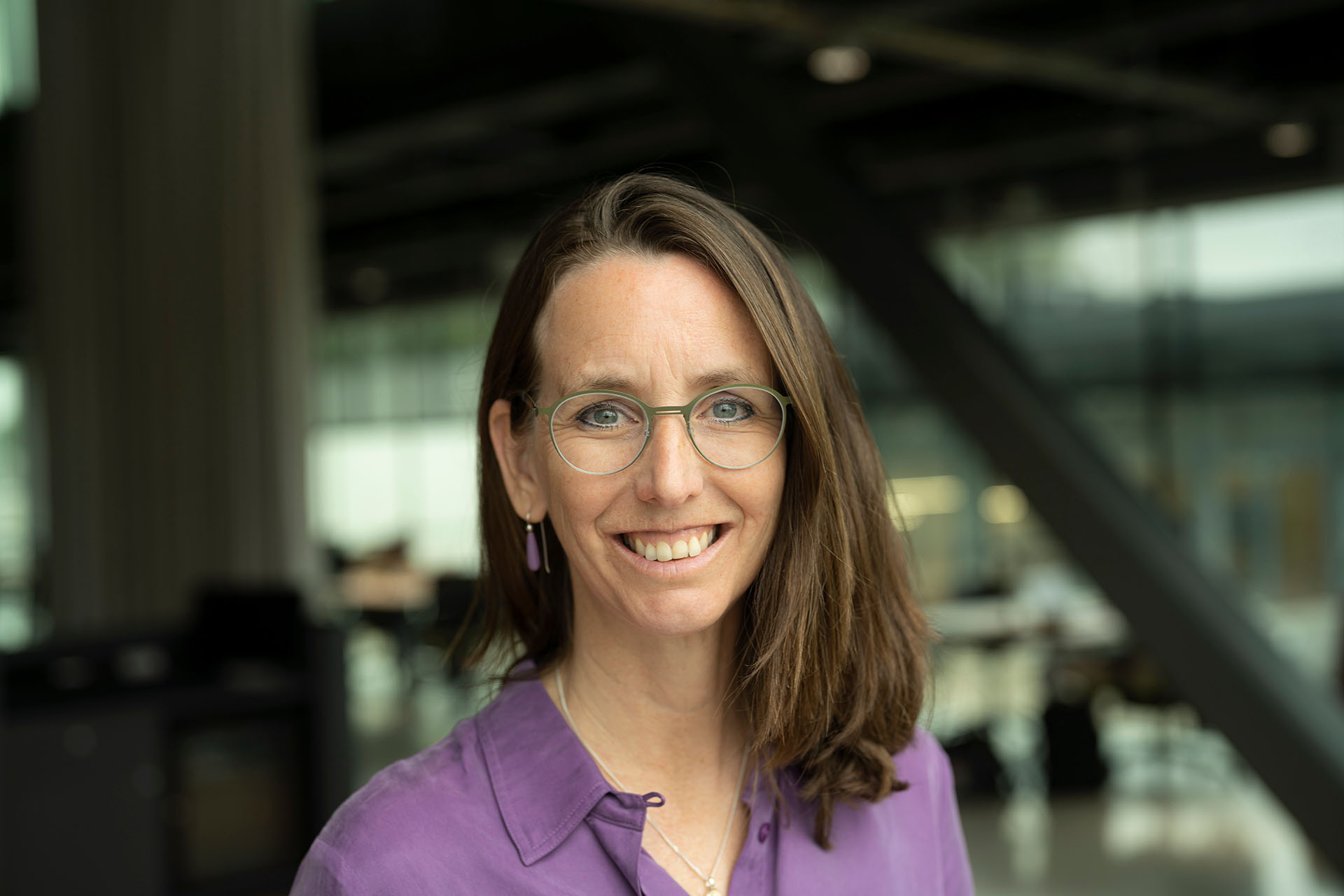
Charlotte van Hees, director of operations
“We’ve asked ourselves how we can make QuTech a safer, more inclusive, and more appreciative place to work.”
In 2022, defining our new strategy required us to rethink the QuTech organisation: how will we work together in the future, what kind of expertise is needed, what kind of labs are needed, and how will we fund that? We’ve not only formulated a new strategy but also made long-term organisational plans for QuTech, which were supported at all levels of TNO and TU Delft.
The commitment of the Executive Board of TU Delft to build a new QuTech building gives us all an enormous boost. In 2022, together with internal and external experts we finished the sketch design of our future home. As the new building won’t be finished before 2026, we will keep upgrading our current lab facilities. In 2022 we built a new quantum computation lab with space for 12 more dilution fridges. A wonderful result for the many engineers and other experts working hard to provide QuTech with the best possible lab facilities.
In 2022, we’ve asked ourselves how we can make QuTech a safer, more inclusive, and more appreciative place to work. An external agency has done a survey to explore how our employees currently experience these aspects at QuTech. Based on the survey, QuTech-wide discussions and training events have taken place, which were extremely useful and inspiring, and are forming the basis for a brand-new social charter, the QuTech EtiQuette.
Finally, as an organisation we are progressing steadily on our path towards a 400 fte size. The responsibilities that come with new funding, for example from the National Growth Fund, are making us recruit a wider range of employees, including for example project managers. Some of my personal highlights are captured in those moments where my colleagues show their talent and organisational skills by bringing people together. Concrete examples of last year were getting us all lined up for a Haka ritual to stimulate the group bonding, performances of the QuTech band, and the well-attended kick-off of our social safety campaign.