Innovation &
collaboration


Partnerships to accelerate development
Quantum technologies are complex – so complex that no single research group or organisation can realise on its own, the promise of quantum computing or quantum internet. Collaboration is essential for innovation. Leaders from academia, engineering, and industry are looking to work together to exploit quantum technology’s potential. QuTech brings them together in strategic collaborations, to build better prototypes and to develop and commercialise them successfully.

Model of the quantum processor used in the research. The qubits are formed by the nitrogen-vacancy center (green and blue), and 13C nuclear spins (orange). By spreading out a single qubit of information over five entangled spin qubits (purple connections), a logical qubit of information is formed that can be operated fault tolerantly. Credit: Taminiau lab at QuTech.
Science to impact
Highlights
In 2025, the Delft ecosystem of quantum technology companies showed impressive growth numbers, while attracting more new companies from outside of Delft and the Netherlands. Academic institutes like QuTech kept growing as well. All of this resulted in 2025 becoming the year that the community of quantum professionals in Delft exceeded the mark of 1,000 people.
With each year that passes, QuTech, as a leading research institute as well as an important incubator of industrial activity, is expected to play a larger part in policy development, vision building, and coordination. More and more, we are being seen as a cornerstone in the Dutch and European quantum technology landscape, resulting in us taking on a role that goes beyond what is normally expected of an academic research institute. We do all this, however, in close and vital collaboration with industry and in excellent connection with government.
Building a thriving ecosystem
Highlights
In 2025, new company Frostbyte spun out of QuTech, after the creation of three new companies the year before. Frostbyte develops cryogenic electronics that address the scaling bottlenecks facing quantum technologies. Their solutions will enable customers to work with the next generation of quantum devices.
With the addition of Frostbyte, QuTech has now spun out eight companies that, by the end of 2025, employed close to 400 people. Zooming out, TU Delft can now claim to have created twelve quantum companies. Together, these companies employ well over 500 people.
Contributing to our valorisation goals, researchers at QuTech continued to generate intellectual property at a high level, creating 18 new Invention Disclosure Forms, filing 12 priority filings with part to come in 2026.
The over 1,000 people working in the quantum technology field—industry as well as academia—create a gravitational pull that continues to attract businesses. In 2025, Delft welcomed new House of Quantum residents or, as Quantum Delta Delft members, both House of Quantum buildings were fully rented out during the course of the year.
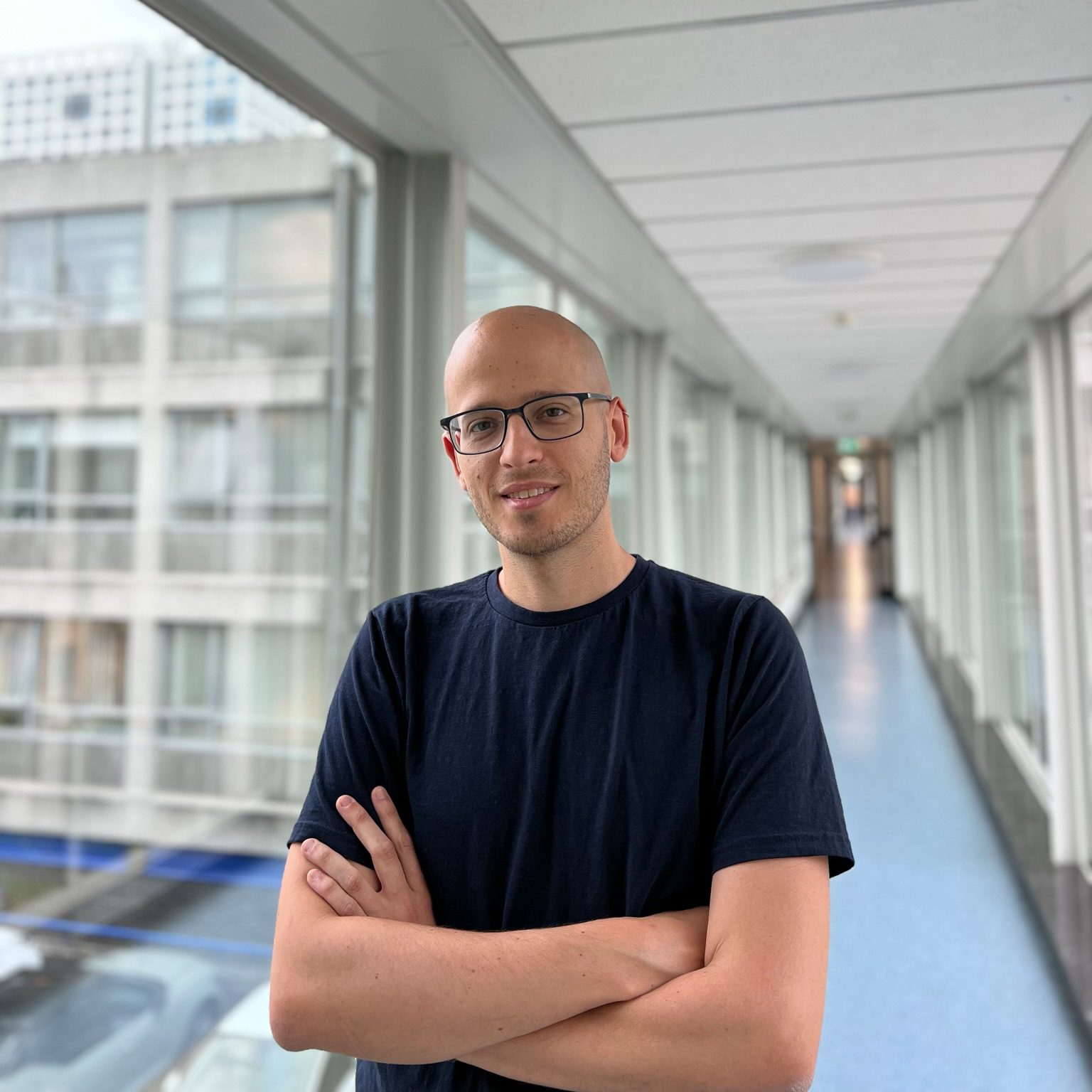
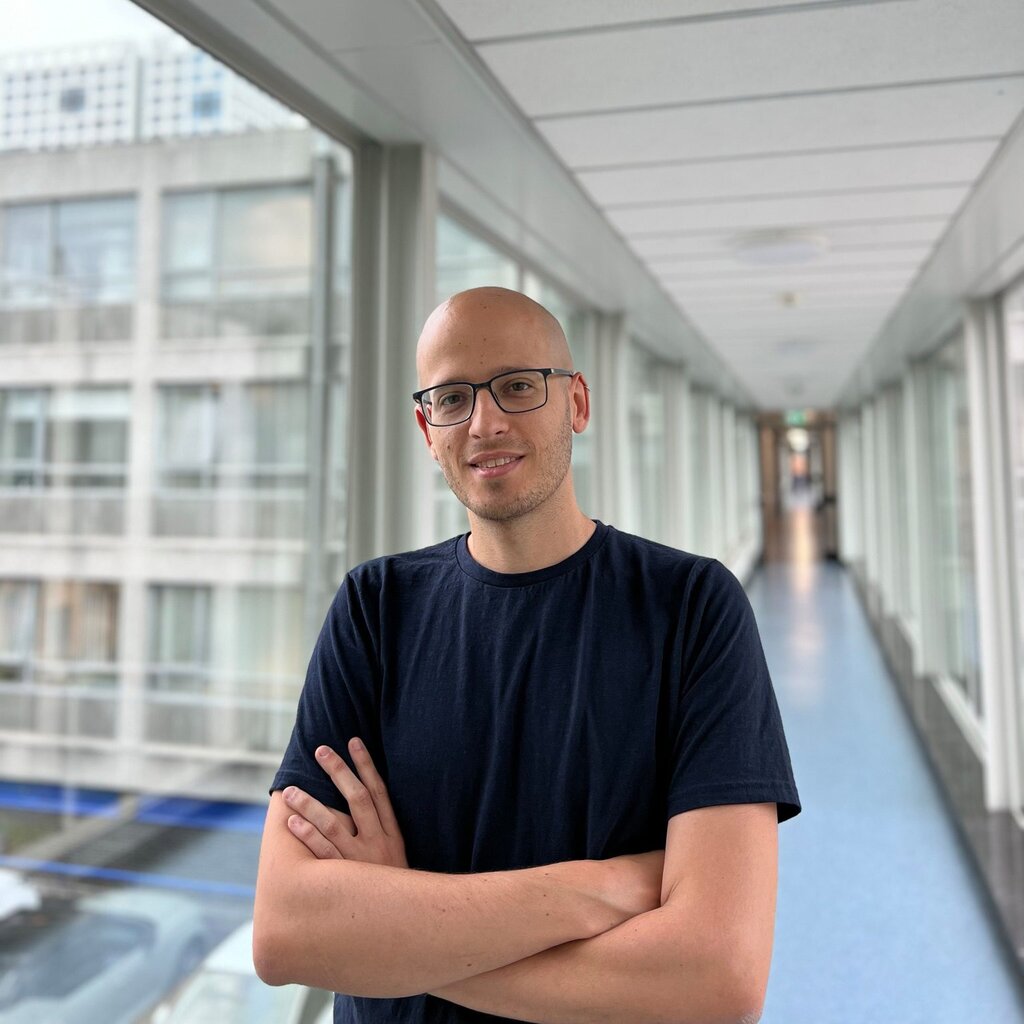
Carlos Errando Herranz
“QuTech demonstrates that scientific excellence and a nice environment where people lift each other up are not a contradiction.”
Read more

Carlos Errando Herranz
“QuTech demonstrates that scientific excellence and a nice environment where people lift each other up are not a contradiction.”
“ I’m Carlos, I lead a group of about 10 very bright students and postdocs at the Quantum Internet Division, and I am also an Assistant Professor at the Quantum and Computer Engineering department, in the EEMCS school.
In my group we work with qubits that are connected by light. This connectivity can enable quantum networks, new error-corrected quantum computers, reconfigurable simulators, and quantum sensors. Specifically, we explore the physics of color center qubits in silicon and we scale up quantum processors via photonic integration.
I am also very interested in separating hype from reality regarding what this “quantum future” really means, and in reaching society via outreach projects like the Qbead (www.qbead.org).
For me, QuTech demonstrates that scientific excellence and a nice environment where people lift each other up are not a contradiction.
There is of course a lot of room for improvement, and many issues in which we should take bolder actions such as social safety, diversity, and mental health, but we got a good starting point!
This is thanks to all the students and postdocs, our amazing technicians and engineers, financial support, management assistants, etc.
Outside of work there are too many things to do with too little time.
I like exploring the cultures of the world by travelling (recent adventures include riding a coal-heated train through the Mongolian steppe and a stubborn horse into the mountains of Kyrgyzstan), listening to live music from jazz and blues to rock and punk, and doing visual arts and crafts in different media such as street art, sculpture, or watercolor.”


QuTech entrepreneurs: spin-offs, spinouts, and patents
Highlights
In 2025, the eight QuTech spin-offs acquired over 45 million euros in investments and grants, a 60% increase compared to the year before. The running total for these companies so far is a combined 125 million euros in funding. For the 12 quantum startups that originated in Delft, the number adds up to around 180 million euros.
On private investments, in March, QuTech spinout QuantWare raised €20 million in Series A funding, adding another €4 million in May. The round was co-led by Invest-NL Deep Tech Fund and Innovation Quarter, with participation from EIC Fund and existing QuantWare investors.
And in June, OrangeQS closed a second round of funding, acquiring €12 million in a seed round led by Icecat Capital, with participation from Cottonwood Technology Fund, QBeat Ventures, QDNL Participations, and InnovationQuarter Capital. In March, they revealed Juice, their open-source state-of-the-art operating system to operate quantum systems, and in January, they shipped their first OrangeQS Max—the only turn-key test equipment for utility-scale quantum chips on the market—to IQM.
On the topic of interesting collaborations, in March, a partnership of Q*Bird, Single Quantum, and Eurofiber was awarded a €1 million grant for a Quantum Key Distribution project in the Randstad region, and in October, Q*Bird installed their MDI QKD Falqon system at Universidad Politécnica de Madrid, taking a major step toward Spain’s first metropolitan-scale, multi-node MDI QKD network. In November, Q*Bird also won the prestigious Deloitte Rising Star Award.
Qblox announced Chalmers University becoming a Qblox excellence centre and choosing Qblox as its go-to quantum control provider in March, and in October, they announced their collaboration with NVIDIA, integrating the Qblox Q1 architecture with NVIDIA NVQLink.
Partnerships to accelerate development
Highlights
In March, researchers at QuTech, in collaboration with Fujitsu and Element Six, demonstrated a complete set of quantum gates with error probabilities below 0.1%. While many challenges remain, being able to perform basic gate operations with errors occurring below this threshold satisfies an important condition for future large-scale quantum computation.
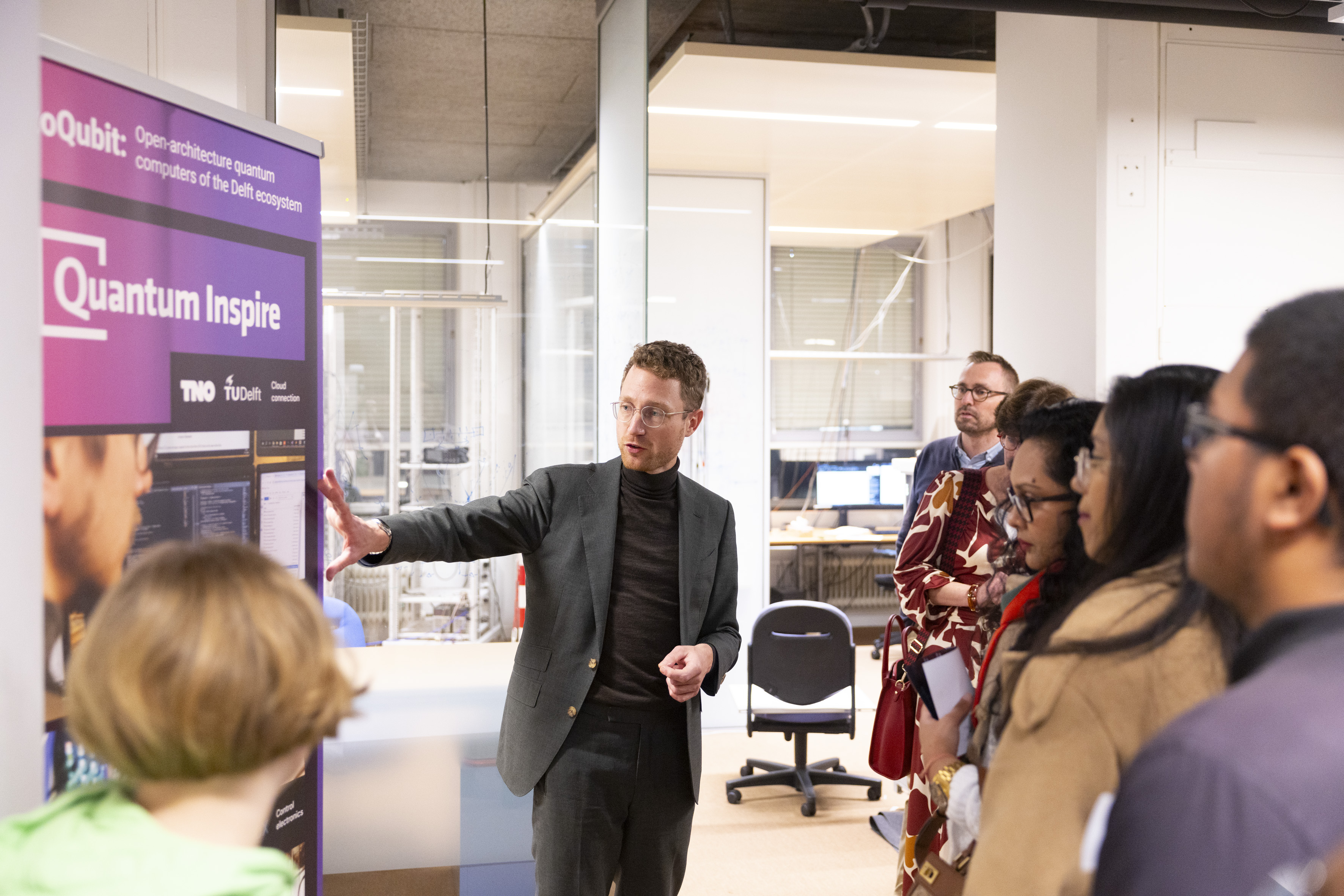
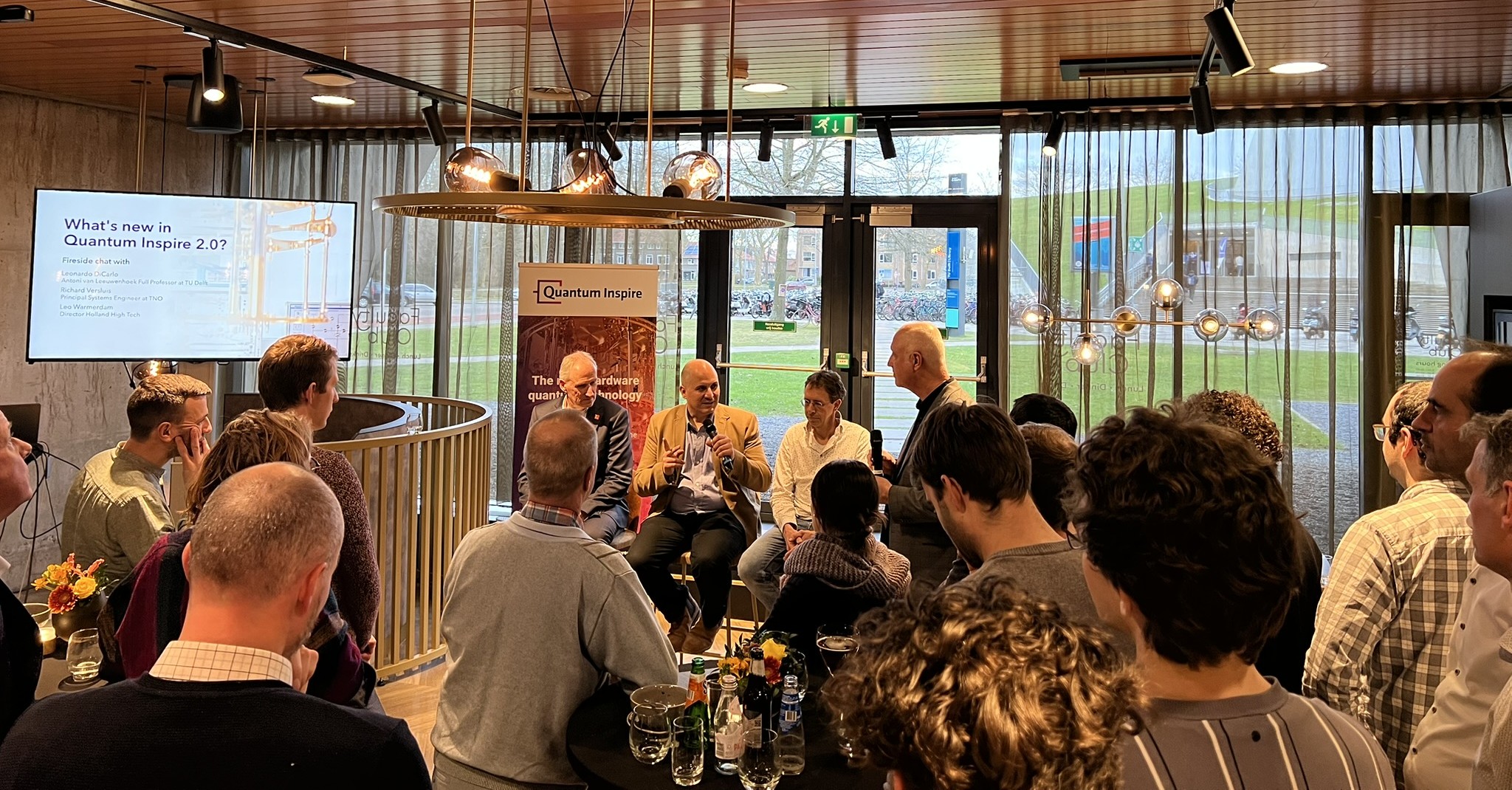
In 2025, QuTech and the Dutch quantum computing ecosystem reached a new milestone toward scalable quantum computing with the releases of the Tuna-5 and Tuna-9 systems via the Quantum Inspire public cloud platform. Developed within the HectoQubit/2 project—a collaboration between QuTech, TNO, and four Dutch quantum startups (QuantWare, Qblox, OrangeQS, and Delft Circuits)—the "Tuna's" showcase fully integrated quantum systems, built using an open-architecture approach and leveraging the Delft quantum supply chain and in close synergy with the EU flagship OpenSuperQPlus project.
Delft has a strong presence in three major European quantum pilot lines: SUPREME, P4Q, and SPINS, highlighting our key role in advancing Europe’s quantum technology ecosystem. These pilots lines each receive €25M support by the EU, with member states pledging another €25M.
QuTech, TNO and Groove Quantum are partners in the European Semiconducting Pilot Line for Industrial Quantum NanoSystems (SPINS), which aims to deliver standardised MPW-based quantum chip manufacturing to strengthen Europe’s technological sovereignty and industrial readiness.
QuTech, as well as Delft companies Delft Networks, Q*Bird, QphoX, and TNO are part of P4Q, the large European photonic pilot line for quantum technologies that focuses on making photonic quantum chips more reliable and scalable.
The European pilot line SUPREME drives the industrialisation of superconducting quantum technologies by developing stable, scalable and accessible platforms for industry and academia. Contributors include QuTech spinoff QuantWare and Delft companies Single Quantum and QphoX, with the TU Delft clean room contributing as well.
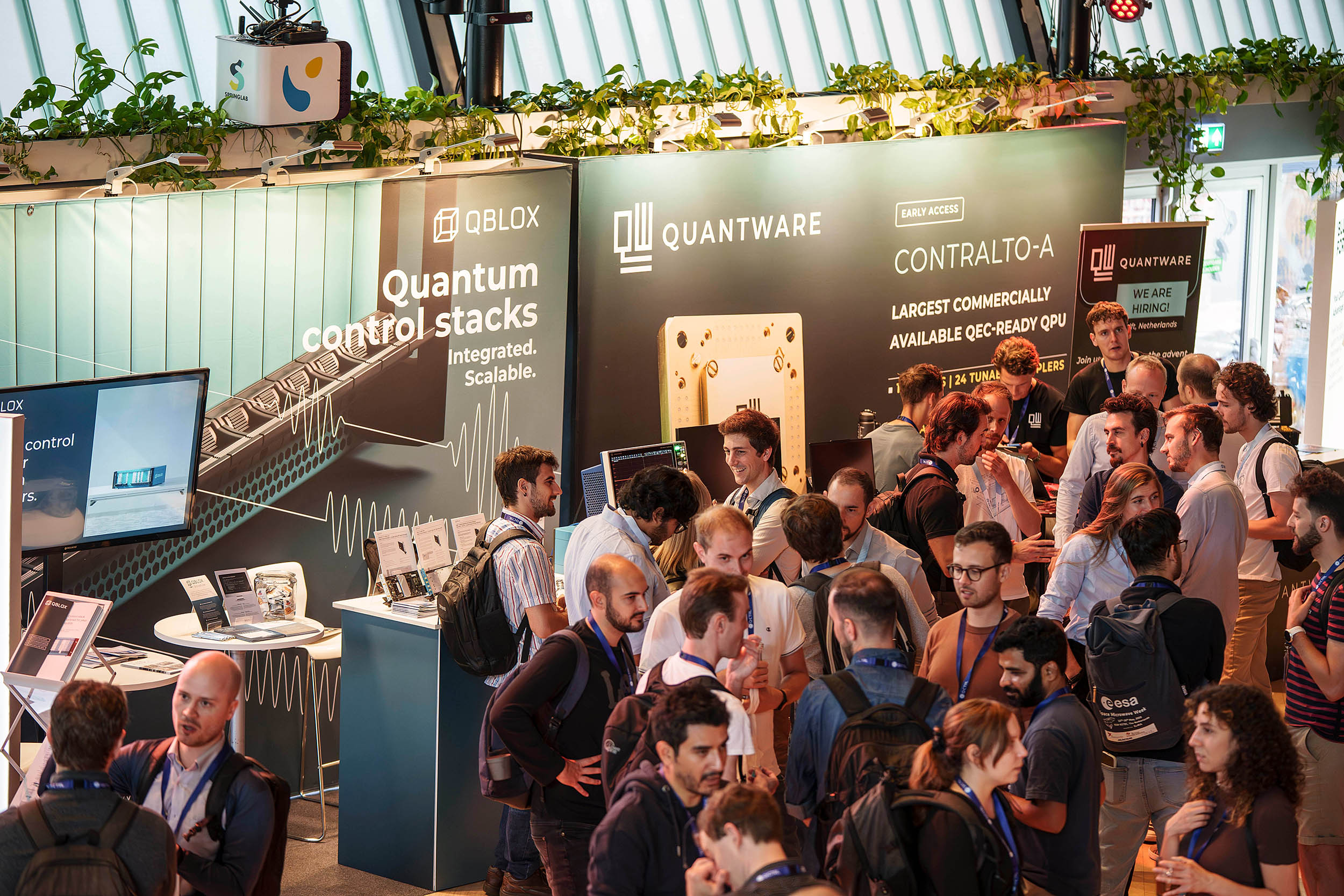
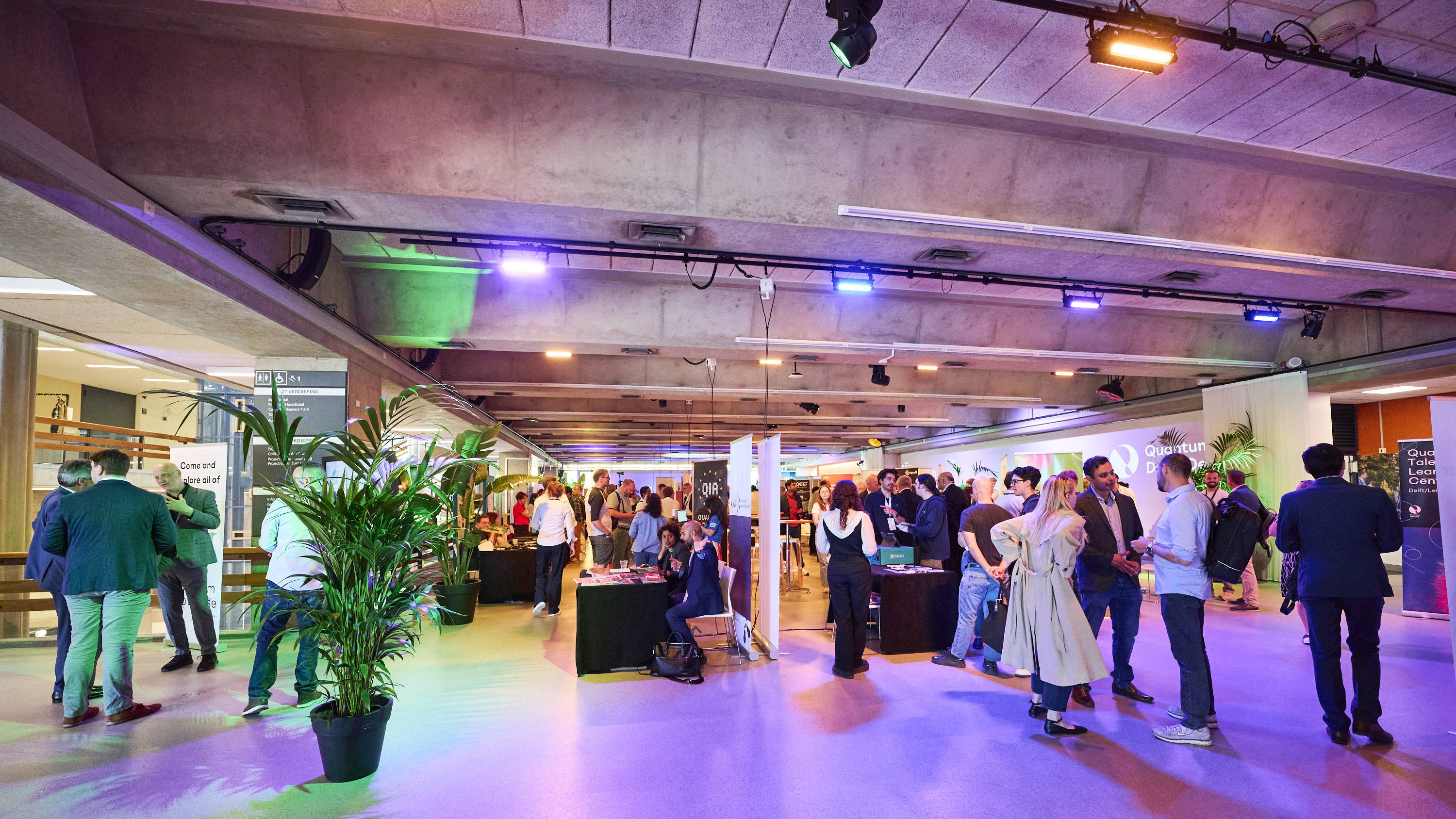
In 2025, QuTech chaired, co-organised, and hosted two important international "travelling" conventions: Super Conducting Qubits and Algorithms (SQA) and the Quantum Networking Workshop (QuNeW). On a smaller scale, QuTech and Quantum Delta Delft organised the first Delft Quantum Showcase, bringing together all of quantum academic research, education, and industry under one roof to present themselves to the larger public.
Next chapter:
Education